|
| Our 'garden' in June 2015 |
Double-click on any photo to see a full-screen slideshow
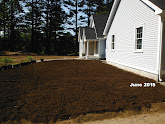
In early June 2015, the firm of Scott Dolan & Company carried out an unusual project: instead of creating a landscape for a new residence (his usual assignment), Scott was charged with removing one. Over the course of two weeks, he removed the top 18 inches (947 cubic yards) of what is accurately called 'builder's crud' and brought in 950 cubic yards of screened loam. He also built a permeable, crushed-stone driveway; an elegant, geometric sidewalk; and a Pennsylvania flagstone patio. When his crew departed, there was half an acre of ready-to-plant soil; lately covered with two inches of brown mulch, but nary a hint of green.
 |
| The Magnolia bed |
When we designed our 'dream retirement house' Betty made it clear she had in mind a very different landscape: a native plant garden without a blade of grass anywhere within its perimeter. I said it was a great idea, and I would provide at least half the labor. By the end of that first summer we had planted nine specimen trees to serve as anchors for beds, and several dozen shrubs. It looked, frankly, rather forlorn. Each year we added additional shrubs, together with bulbs, perennials and ground covers. Gradually, the garden began to form a coherent whole. Year by year, Betty's vision became more apparent.
 |
| The same view in 2022 |
The garden has now reached something approaching maturity. In a month it will be dominated by sweeps of flowering perennials as rudbeckia, penstemon, monarda, shasta daisies, and betony bring their colorful blooms. Right now, though, there is something different (and, in its own way, more elegant) to see: dabs of color made by shrubs, ground covers, and early-blooming perennials collectively forming an every-shifting canvas.
 |
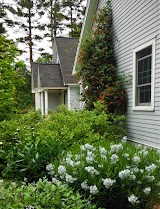
| Viewed from the front porch |
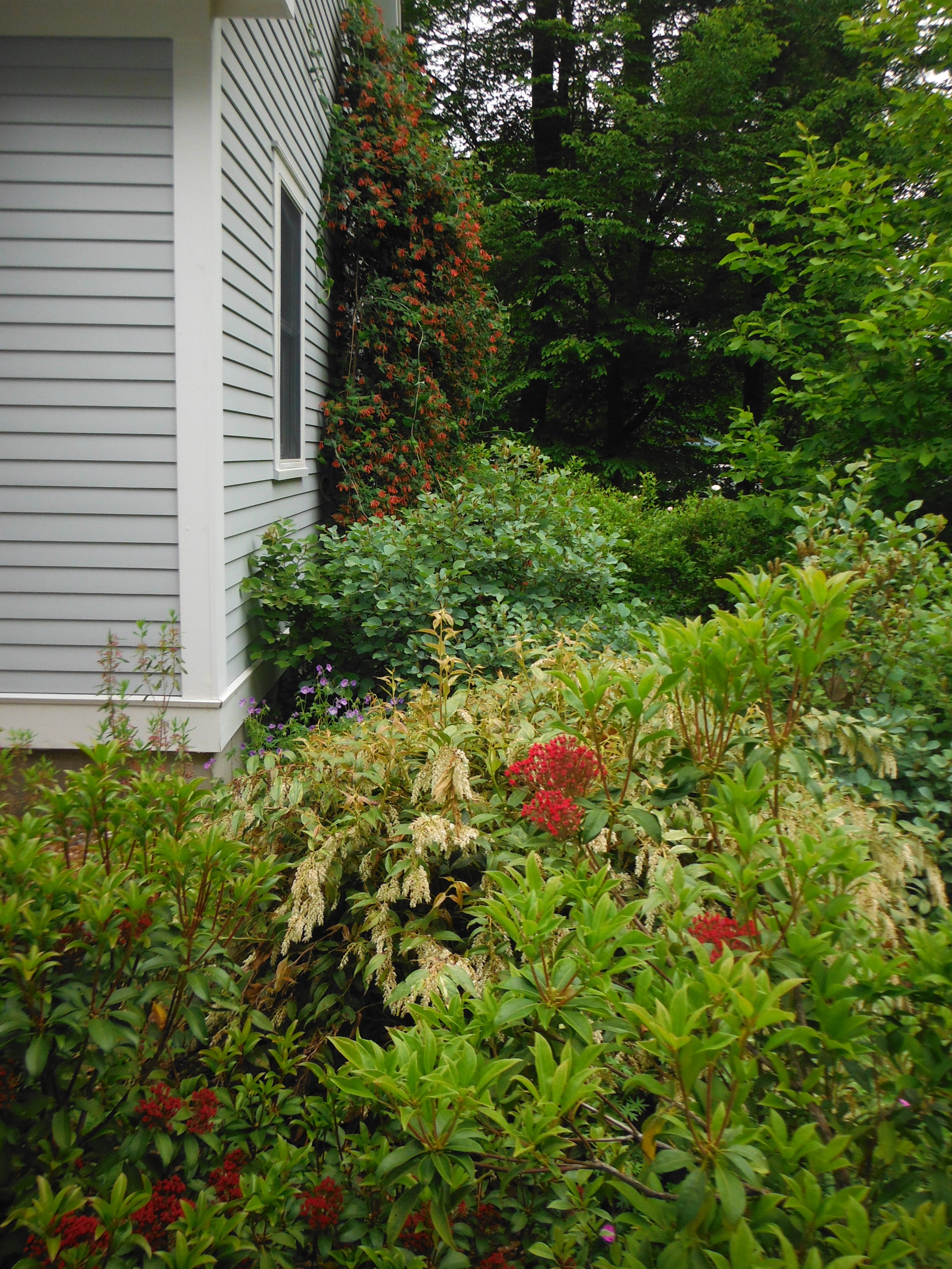
In the 'Magnolia bed' closest to the house, from one vantage point there is a succession of blue-flowering
Amsonia, behind which are white and yellow peonies; all framing a flaming red honeysuckle (
Lonerica sempervirens) that climbs fifteen feet up one wall of our garage. Walk up the sidewalk a few feet and that same honeysuckle is now the backdrop for white
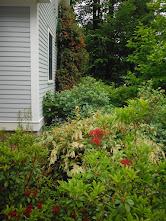
Baptisia, a yellow-flowering bush honeysuckle, and purple and blue geraniums. Getting closer to the front porch (see photo at left), the color comes from flowers of brilliant red mountain laurel (
Kalmia 'Sara') and the multi-colored foliage of
Leucothoe 'Girard's Rainbow' with its tiny, ivory flowers.
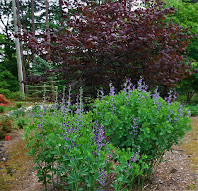 |
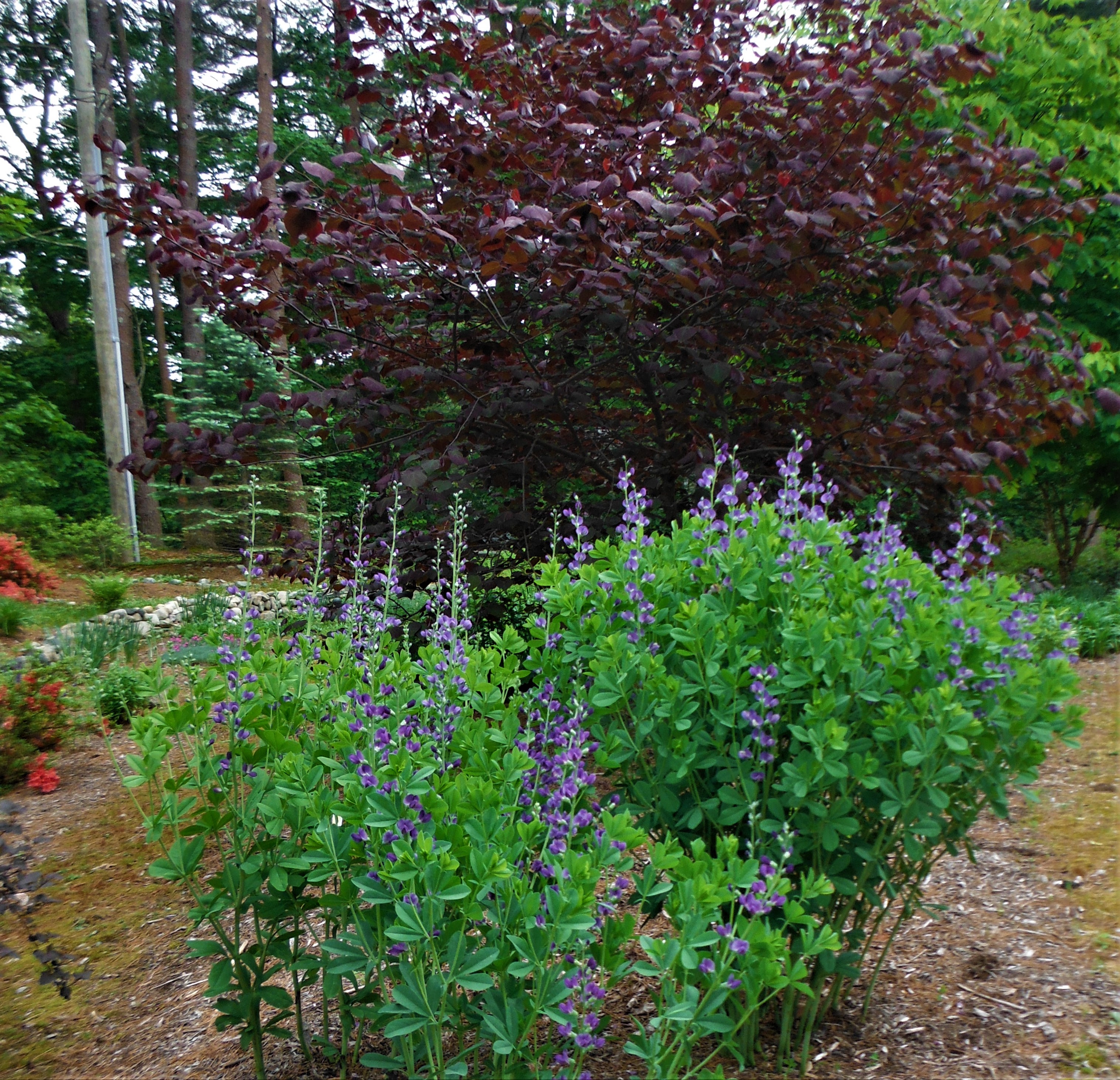
| Our redbud with Baptisia |
Elsewhere in the front garden, our redbud (
Cercis canadensis 'Burgundy Hearts') has show-stopping dark red foliage. Depending on which path you take through the garden, it can be the backdrop to a stand of blue
Baptisia, the stark white flowers of a maple-leaf
Viburnum, or the brown leaves and pink-white flowers of a pair of ninebarks (
Physocarpus opulifolius 'Diablo'). At the far corner of the front garden, a dwarf black birch (
Betula nigra 'Little King') presides over a brilliantly yellow bed of golden ragwort (
Packera aurea).
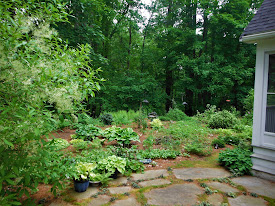 |
| The rear garden with fringetree in bloom |
In the rear garden, our diminutive fringetree (
Chionanthus virginicus) bloomed with white flowers for the first time this year. Beyond it is a sea of unusual, colorful groundcovers ranging from columbine to phlox to false strawberry (
Potentilla indica) and blue ajuga. Multiple viburnums are coming into flower.
 |
| This essay is being written from that porch |
All this was just Betty's vision in June 2015; a gamble, really. Could a retired couple in their mid-60s possibly plant such a large space? How would they maintain it? Who would every buy it if they had to sell? Well, we did manage to plant it on our own (thank you, ibuprofen) and its maintenance is considerably less than a 'traditional' lawn and shrubs (and a lot more fun). As to selling it, we built a home into which we could age gracefully. We only wish everyone could have a garden as well-planned for long-term enjoyment coupled with ease of care... and a home with views as beautiful as the ones we enjoy every day.